
WeLoveU Foundation Hosts Packs on Backs Webinar
On Monday, August 23, 2021, educators and principals from California, Illinois, and New Jersey came together to raise awareness and help fundraise for students who need backpacks. It happened virtually at the Intl. WeLoveU Foundation’s Closing the Homework Gap: Packs on Backs Webinar. Viewers learned about the supply gap and how they could get involved.
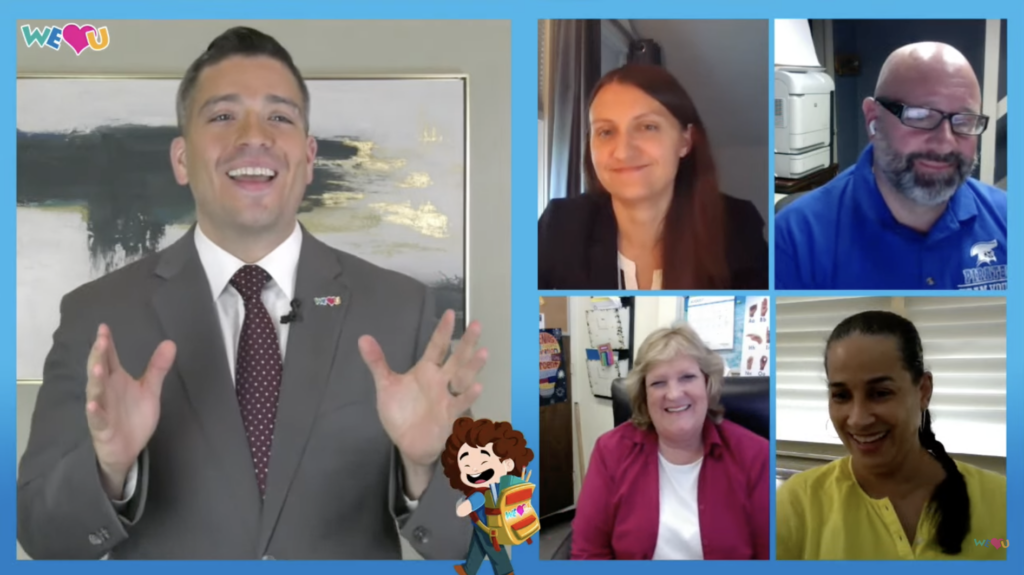
Meet the Panel
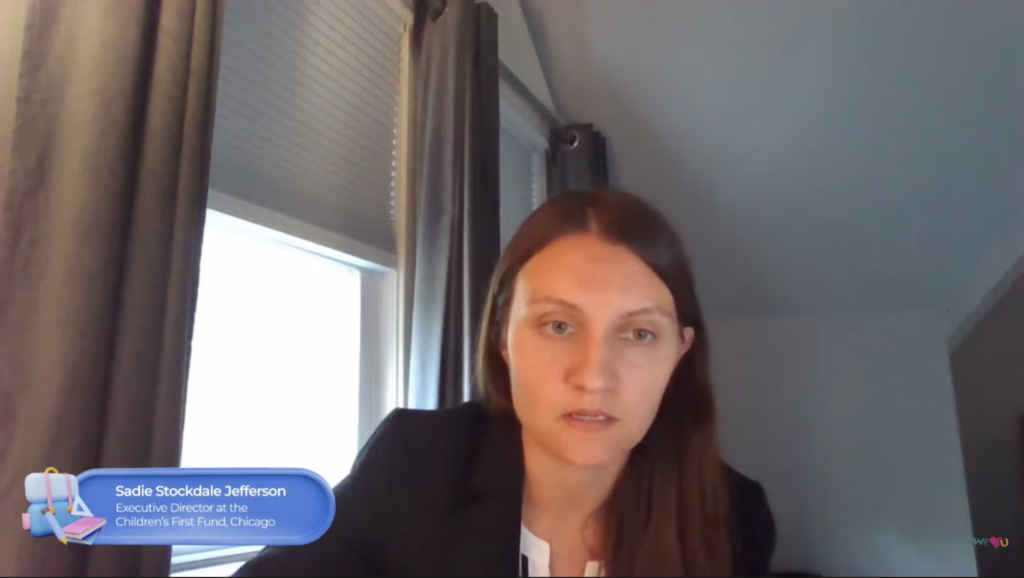
Panelist #1: Executive Director Sadie Stockdale Jefferson from the Children First Fund in Chicago, IL. Sadie spoke about the 350,000 students that the Children’s First Fund helps to support as a direct partner of the Chicago Public Schools district. She described the core of their mission as championing students’ individual needs; oftentimes, those needs are supplies, meals, etc.
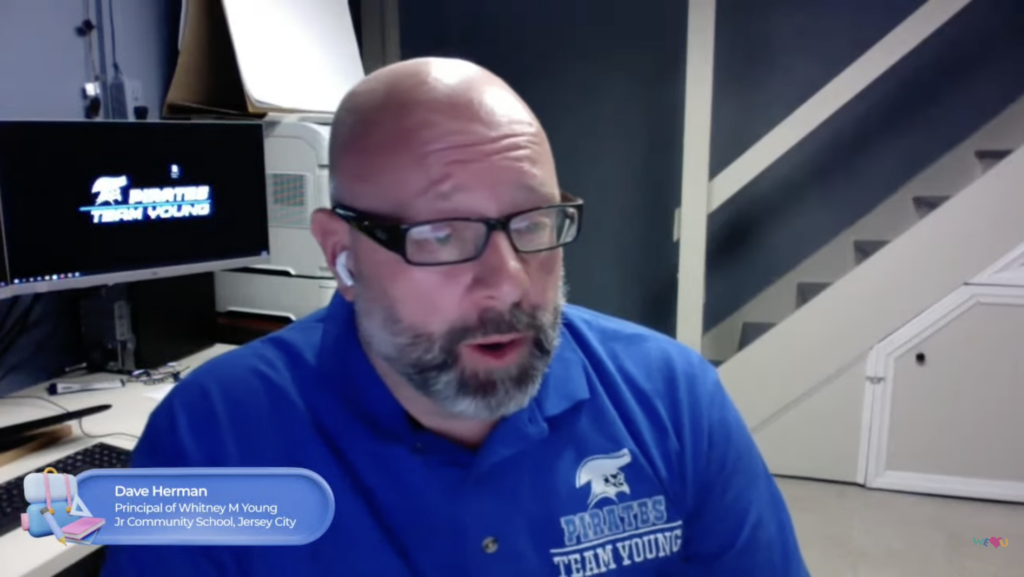
Panelist #2: Principal Dave Herman from the Whitney M. Young Jr. School in Jersey City, NJ. As a father of five with more than 30 years of experience working in the Jersey City School district, Principal Herman spoke passionately about the multi-faceted challenges and solutions that he and his staff encountered during the pandemic.
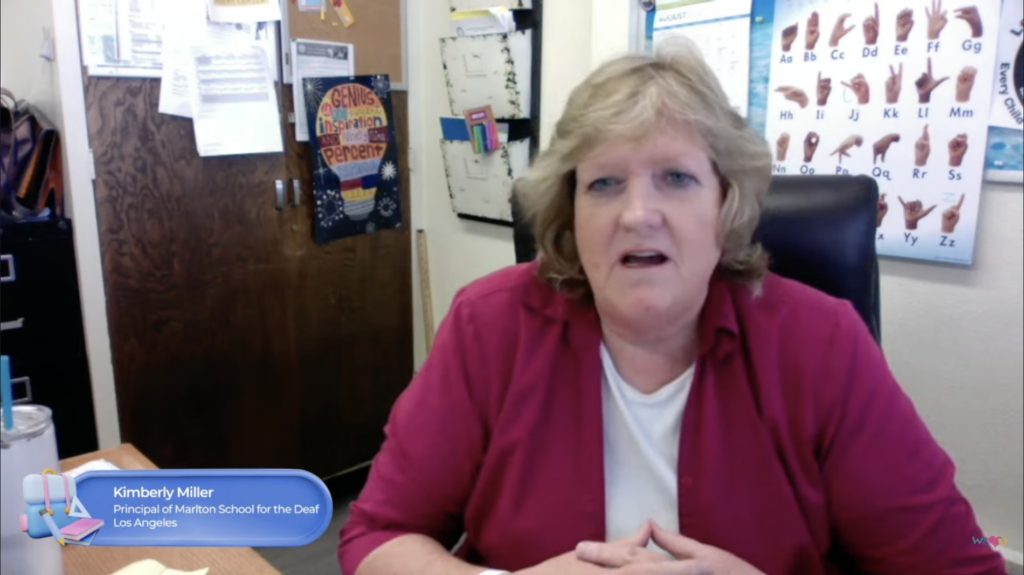
Panelist #3: Principal Kimberly Miller from Marlton School for the Deaf in Los Angeles, CA. Marlton School for the Deaf is the only school of its kind to use American Sign Language to communicate with students from grades pre-k through 12.
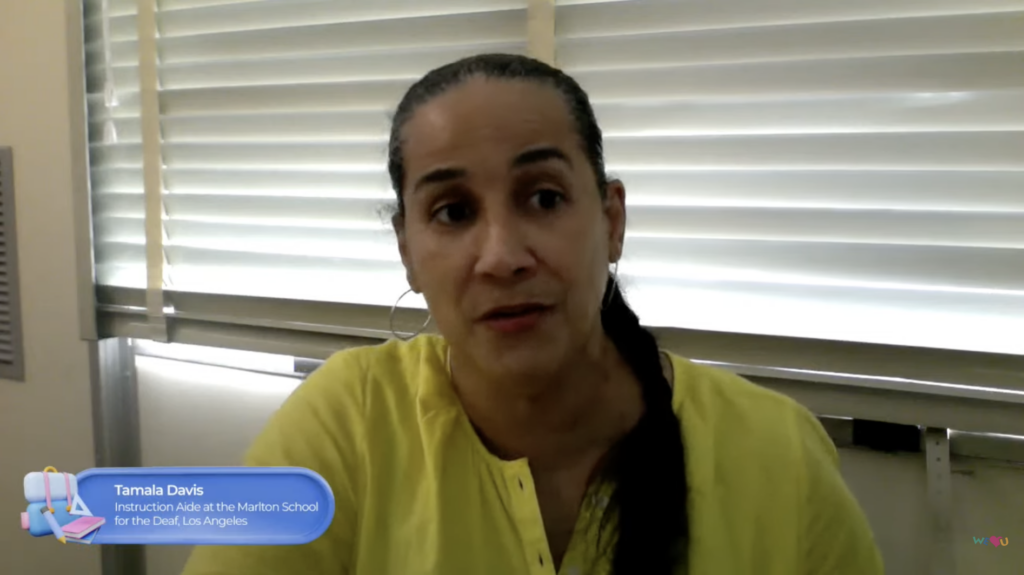
Panelist #4: Instruction Aide Tamala Davis from Marlton School for the Deaf in Los Angeles, CA. Ms. Davis is also a soon-to-be social worker in the Los Angeles district.
About the Need
WeLoveU host, Mr. Casas, started the discussion by introducing WeLoveU’s latest educational project — Packs on Backs. The project falls under the Closing the Homework Gap campaign. Ultimately, Packs on Backs aims to put backpacks on the backs of students returning to school who need them.
The panelists spoke firsthand about how the COVID-19 pandemic has made economic difficulties more challenging for families and about how the opportunity gap has disproportionately affected their students.
“We had about 50% of the parents interacting with the school and trying to express to us what they needed. A lot of people are guarded,” explained Principal Dave Herman. “The pandemic taught me as well as the staff to listen to the things [the students or parents] are not saying.”
“During the pandemic last year, we saw a disproportionate impact on our low-income students,” noted Sadie. “We know that talent and intelligence are equally distributed, but that opportunity is not. There are barriers for students that have nothing to do with their talent or intelligence, things like having basic school supplies.”
Panelists from the West Coast described that the same opportunity gap was present in their schools and communities despite the difference in coasts.
Principal Kimberly Miller described the loss of jobs for many families and the technological barriers that the deaf and hard of hearing students and staff faced even more severely than others while trying to sign with small screens during zoom classes.
How Packs on Backs Can Help
The webinar concluded with each panelist expressing why the Packs on Backs campaign will benefit students and their hopes for closing the opportunity gap.
“It’s not just backpacks,” explained Sadie in regards to WeLoveU’s backpack donation campaign. “It’s the message to families and school communities that the community cares and that the community cares enough to provide this resource.”
“Especially in our low-income areas, they’re often overlooked. It’s a message to our students and their families that people care about them and that people want to help them to succeed,” added Principal Kimberly. “So I believe that these backpacks will help students understand as you say, ‘We love you.’ They don’t always know what love is, so it’s a wonderful opportunity for these students to have.”
“COVID brought an awareness that before was taken for granted. People didn’t necessarily understand how much kids in certain areas were deprived of basic things like internet, technology, and things of that nature,” expressed Ms. Tamala Davis. “Technology, in particular, is very important for closing that gap. So, I’m hoping that in the future we’ll maybe even have access to universal internet service for everyone.”